
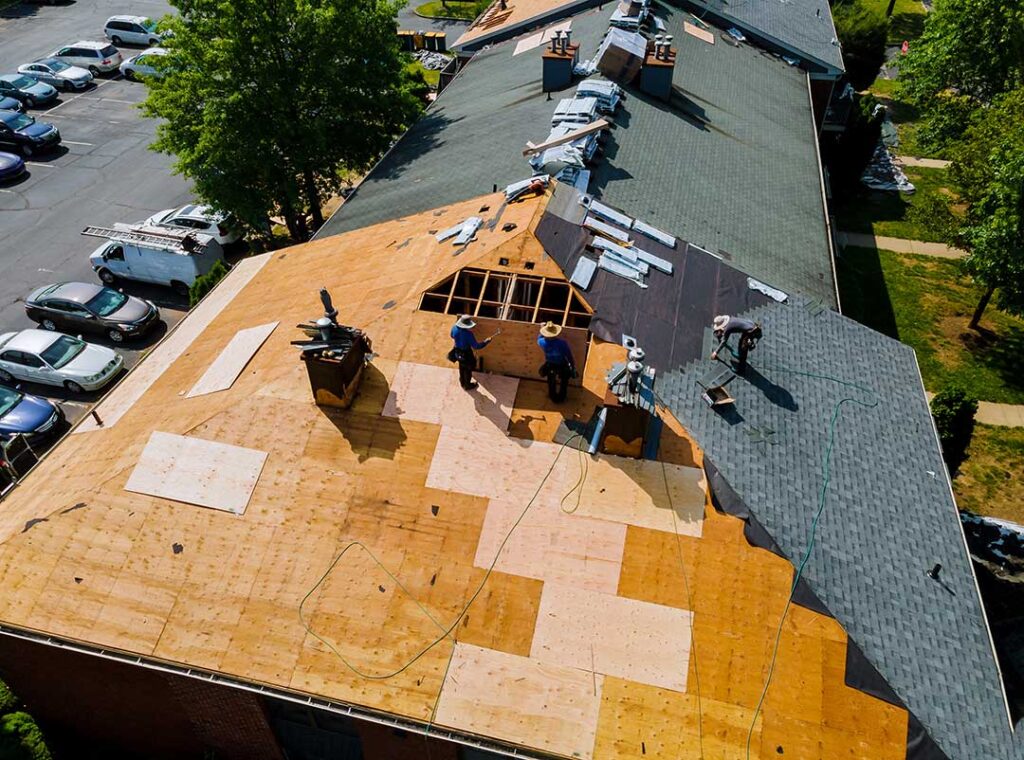
Hanging seasonal lights can be done safely when the work is planned around fall hazards, electrical risks, winter weather, and the condition of the roof itself. For homes in Ballston Spa, NY, cold temperatures, snow, ice, and wet leaves can make an otherwise simple decorating task more hazardous than it appears.
Is it safe to stand on the roof to hang lights?
Usually, the safest approach is to avoid walking on the roof whenever possible. Many roof edges and upper trim areas can be reached from a properly positioned ladder, from the ground with a purpose-made extension tool, or by attaching lights to lower gutters and eaves instead of climbing onto the roof surface.
A roof should not be climbed if it is wet, icy, frosted, snow-covered, steep, damaged, or covered with loose debris. Asphalt shingles can become slippery in cold weather, and concealed ice may not be visible from the ground. Snow and freeze-thaw conditions common in the area can also weaken footing near roof edges.
Do not use the roof as a shortcut for reaching a section of trim that can be decorated from below. The extra height may not be worth the increased fall risk.
How should a ladder be set up?
A ladder needs firm, level footing and enough height to perform the work without leaning sideways or standing on the highest steps. Keep the area below clear of toys, tools, vehicles, and foot traffic.
Before climbing:
- Inspect the rails, rungs, feet, locks, and labels for damage.
- Place the ladder on stable ground, not on snow, ice, loose soil, boxes, or improvised blocks.
- Face the ladder while climbing and keep both hands available whenever possible.
- Do not move or reposition the ladder while anyone is on it.
- Have another adult stabilize the ladder when conditions are uneven or the work requires frequent reaching.
- Keep the belt buckle area between the ladder rails rather than leaning beyond one side.
OSHA ladder guidance also warns against using the top step of a stepladder and requires defective ladders to be removed from service until repaired. ([osha.gov](https://www.osha.gov/laws-regs/regulations/standardnumber/1926/1926.1053?utm_source=openai))
A ladder should extend high enough to allow a safe handhold while stepping near the roof edge. If the setup requires stretching, twisting, standing on the top steps, or placing the ladder against unstable gutters, the arrangement is not suitable.
What should be checked before attaching lights?
Inspect the roof edge, gutters, fascia, soffits, and shingles before beginning. Avoid attaching decorations to loose gutters, cracked trim, lifted shingles, or areas with visible water damage. Clips placed on weak surfaces may pull materials loose or create a path for moisture.
Use clips designed for outdoor lighting rather than nails, staples, screws, or sharp fasteners. Puncturing shingles or forcing hardware beneath them can damage the roof’s water-shedding layers. Never staple through a light cord.
Plan the route before climbing. Measure the approximate length needed, identify the outlet location, and decide where the cord will cross from the roofline to the ground. This reduces the time spent on a ladder and helps prevent cords from hanging across walkways.
How can electrical risks be reduced?
Use lights and extension cords specifically marked for outdoor use. Indoor-only products may not have the insulation, sealing, or weather resistance needed for exposure to rain, snow, and temperature changes.
Before installation, look for:
- Frayed, cracked, pinched, or exposed wires
- Broken sockets or missing bulbs
- Loose connections
- Melted plastic or discoloration
- Damaged plugs or extension cords
- Water inside connectors
Discard damaged light sets rather than repairing them with improvised tape or exposed wire. The U.S. Consumer Product Safety Commission identifies inadequate wire size, poor strain relief, and missing overcurrent protection as hazards in seasonal lighting products. ([cpsc.gov](https://www.cpsc.gov/Business–Manufacturing/Business-Education/Business-Guidance/Household-Electrical-Products/Seasonal-and-Decorative-Lighting-Products?utm_source=openai))
Plug outdoor lighting into a ground-fault circuit interrupter, commonly called a GFCI. A GFCI can shut off power when it detects current flowing along an unintended path, which is especially useful around wet ground, snow, and exterior surfaces.
Keep plug connections elevated and protected from puddles, melting snow, and areas where water can run down a cord. Do not bury connections in snow or place them directly on wet ground. Follow the light manufacturer’s limit for how many sets may be connected together.
How far should lights and ladders stay from power lines?
Maintain a wide separation from overhead electrical lines, service drops, and other energized equipment. Ten feet is a commonly cited minimum clearance for work near overhead power lines, and greater distance is safer when handling long cords, poles, ladders, or light strands. OSHA advises workers to look for overhead lines, assume they are energized, and use nonconductive ladders where electrical contact is possible. ([osha.gov](https://www.osha.gov/green-jobs/green-roofs/electrical?utm_source=openai))
Do not use a metal ladder near power lines. Also remember that a ladder, extension pole, or long strand of lights can swing unexpectedly in wind. If the intended lighting route passes near a service line, choose a different design rather than trying to work around it.
What is the safest way to work in cold weather?
Choose a dry, calm day with good visibility. Avoid installing lights during active snowfall, freezing rain, strong wind, or when temperatures are causing rapid ice formation.
Wear footwear with a clean, slip-resistant sole, but do not assume winter boots make a roof safe. Heavy coats can restrict movement, gloves can reduce grip, and numb fingers make it harder to control clips and cords. Take breaks if hands become cold or coordination declines.
Keep snow removal and lighting work separate. Clearing a roof edge or gutter while also handling a ladder and electrical decorations increases the chance of losing balance. Snow sliding from an upper roof section can also knock a person or ladder out of position.
Can lights be left up through winter?
Outdoor-rated lights can generally remain installed only if they are securely attached, protected from abrasion, and used according to their instructions. Wind can turn loose strands into hazards, while ice and snow can add weight to gutters and trim.
After storms, inspect from the ground for sagging cords, detached clips, fallen branches, damaged bulbs, or decorations pressing against the roof edge. Unplug the system before touching or adjusting any component. Never pull on a cord to free it from ice.
If lights have become frozen into snow or ice, do not yank them loose. Wait for conditions to moderate or remove power and address the problem without climbing onto an unsafe surface.
When should the work be stopped?
Stop immediately if the ladder shifts, the roof becomes wet or icy, wind increases, electrical components become damaged, or the work requires stepping onto a surface that cannot be reached securely from the ladder.
A roof with a steep pitch, multiple levels, fragile materials, skylights, roof openings, or difficult access presents additional hazards. Fall protection systems require proper equipment, training, and anchorage; a rope tied to a chimney or vent is not an adequate substitute.
The safest lighting arrangement is one that can be installed and removed without walking on an unsafe roof, reaching beyond a stable ladder position, damaging roofing materials, or placing electrical equipment where water can collect.
