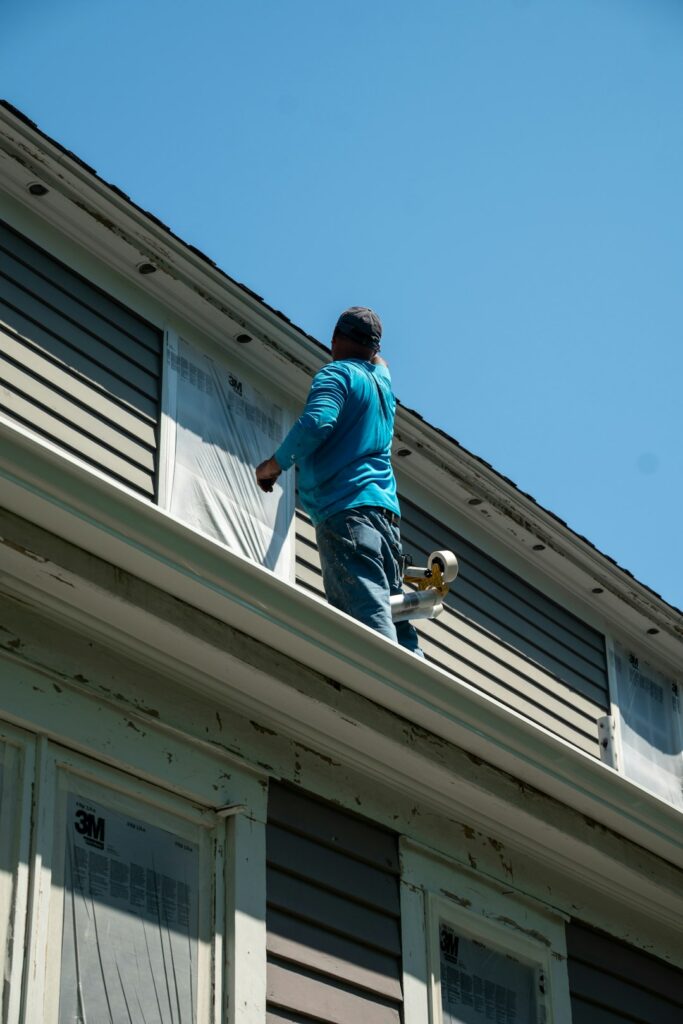
Roof damage should be documented before cleanup or repairs begin, provided the property can be inspected safely. Clear photos, written notes, receipts, and records of communication can help show what happened, what was damaged, and what temporary steps were necessary.
What should be documented first?
Start with the condition of the roof and interior spaces immediately after the suspected loss. A winter storm, wind event, falling branch, ice buildup, or heavy rain can create damage that is not fully visible from the ground.
Do not climb onto a roof, enter a visibly unstable area, or approach downed electrical lines. From a safe location, document:
- The date and approximate time the damage was discovered
- The weather or event that may have caused it
- Missing, lifted, cracked, or displaced shingles
- Damaged flashing, vents, gutters, skylights, chimneys, or roof edges
- Fallen branches, tree limbs, or other objects
- Water stains, dripping, damp insulation, or damaged ceilings indoors
- Damage to walls, flooring, furniture, appliances, and personal belongings
- Any areas that appear unsafe or structurally compromised
Take wide photographs first to show where the damage is located on the home. Then take closer images of individual problems. A sequence of wide, medium, and close-up photos is usually more useful than a collection of close-ups without context.
How should roof damage be photographed?
Photos should tell a visual story from the undamaged surroundings to the specific problem. Use daylight when possible, and take additional images from several angles.
For exterior documentation, photograph:
- Each roof slope that can be seen safely from the ground
- The side of the building facing the suspected source of damage
- Roof edges, valleys, gutters, downspouts, and exterior walls
- Debris on the roof or ground
- Nearby trees or branches that may have struck the structure
- Any visible openings where water, snow, or wind could enter
Place a common object such as a ruler or measuring tape near a small damaged area if it can be done without creating a safety risk. Avoid placing objects on the roof merely to improve a photograph.
For interior damage, photograph the entire room before moving items. Then capture the affected ceiling, wall, floor, and contents. Include furniture and household items in their original positions when practical. A short video can also show the extent of leaking, staining, or water collection, but still photographs are useful for individual details.
Preserve the original files. Avoid editing, cropping, or applying filters to the only copies. Phone images often contain date and time information, but it is still helpful to keep a separate written record.
What written information should accompany the photos?
Photos show condition, but written notes explain timing and sequence. Create a simple incident record while the details are fresh.
Include:
- The date and time the problem was first noticed
- The weather conditions before and during discovery
- What was happening inside the home
- The rooms or areas affected
- Whether the damage appeared to worsen
- Actions taken to limit additional damage
- Names or departments of people contacted
- Claim numbers, reference numbers, and dates of conversations
For example, a note might state that water was first observed on a bedroom ceiling after overnight wind and rain, followed by a photograph of the ceiling, an image of the exterior roof edge, and a receipt for materials used to cover an opening.
Avoid guessing about the technical cause. It is better to write “three shingles were found on the ground after high wind” than to state with certainty that wind caused every visible defect. An insurance adjuster or qualified inspector may need to determine whether the damage came from a covered event, age, maintenance issues, or a combination of factors.
Should temporary repairs be made before the insurance inspection?
Temporary measures are generally appropriate when they are needed to prevent additional damage, but they should be limited to what can be done safely. In a snowy and freeze-prone climate, an unrepaired roof opening can allow water to enter and may lead to wet insulation, damaged ceilings, or frozen plumbing conditions.
Reasonable temporary steps may include:
- Placing containers beneath active leaks
- Moving furniture and belongings away from water
- Covering interior items with plastic sheeting
- Tarping a small exterior opening from a safe position
- Removing water that could damage flooring or furnishings
- Clearing only loose debris that presents an immediate hazard
Photograph the damage before taking these steps whenever possible. Photograph the temporary repair afterward as well. Save receipts for tarps, protective materials, emergency drying, equipment rental, and other directly related expenses. Keep a brief record explaining why each purchase was necessary.
Do not make permanent repairs, discard damaged materials, or remove damaged belongings before the insurer has had a reasonable opportunity to inspect, unless leaving them in place would create a health or safety hazard. If something must be discarded, photograph it thoroughly and keep any available labels, serial numbers, receipts, or other proof of ownership.
What should be documented inside the home?
A roof claim may involve more than shingles. Water entering through a roof can affect insulation, drywall, paint, flooring, electrical fixtures, cabinetry, and personal property.
Create a room-by-room inventory. For each damaged item, record:

- The item’s description and location
- The approximate age
- The original purchase price, if known
- The estimated replacement cost
- The brand, model, or serial number when available
- Whether the item can be cleaned or repaired
- Photos showing the item and the damage
Search household records for receipts, online order confirmations, warranties, manuals, photographs, and credit card statements. If an item was purchased long ago and no receipt remains, write down the best available estimate and explain how that estimate was determined.
Do not assume that every damaged item will be covered in the same way. The policy may distinguish between the roof itself, improvements to the dwelling, personal property, debris removal, and temporary living expenses. Coverage can also depend on the cause of loss, deductible, policy limits, exclusions, and whether payment is based on replacement cost or actual cash value.
When should the insurance company be notified?
Notify the insurer or agent promptly after documenting the immediate conditions and taking reasonable steps to prevent further damage. The policy may contain reporting requirements, proof-of-loss deadlines, cooperation duties, and instructions about inspections.
Before the adjuster arrives, organize:
- Photos and videos in date order
- A written timeline
- Receipts for temporary measures
- A list of damaged rooms and belongings
- Previous roof records, if available
- Maintenance or repair records
- Any estimates or inspection reports already obtained
- Notes from conversations with the insurer
Keep copies of everything submitted. After a phone call, write down the date, the person spoken with, and what was discussed. Written communication can make the claim history easier to follow.
What common documentation mistakes should be avoided?
Several habits can make a claim harder to evaluate:
- Photographing only the most severe damage without showing its location
- Cleaning up before taking pictures
- Assuming visible roof wear proves storm damage
- Throwing away damaged property too quickly
- Failing to save receipts for emergency expenses
- Making permanent repairs before an inspection
- Relying on memory instead of a dated written timeline
- Posting detailed damage images publicly before the claim is resolved
- Signing documents without understanding what rights or payments they address
A claim is not automatically approved because photographs exist. Documentation supports the facts, but the policy controls coverage. If the insurer disputes the cause, scope, valuation, or deadline, ask for the explanation in writing and review the specific policy language.
For major damage, unsafe conditions, or disagreements involving substantial amounts, independent legal or insurance guidance may be appropriate. Keep the focus on accurate records: what happened, what was damaged, what was done to protect the home, and what expenses followed.